A custom hockey bag looks like a simple purchase: pick a size, add the team logo, place the order. Then the season starts, and the shortcuts show up. The zipper blows out on an overstuffed junior bag, the gear never dries, or half the team is hauling wheels they did not need up the arena stairs. Most of these problems are decided at the order stage, not on the ice. Here are the five mistakes that turn a good team bag into a mid-season regret, and how to avoid each one.
Mistake 1: Sizing to the label instead of the gear
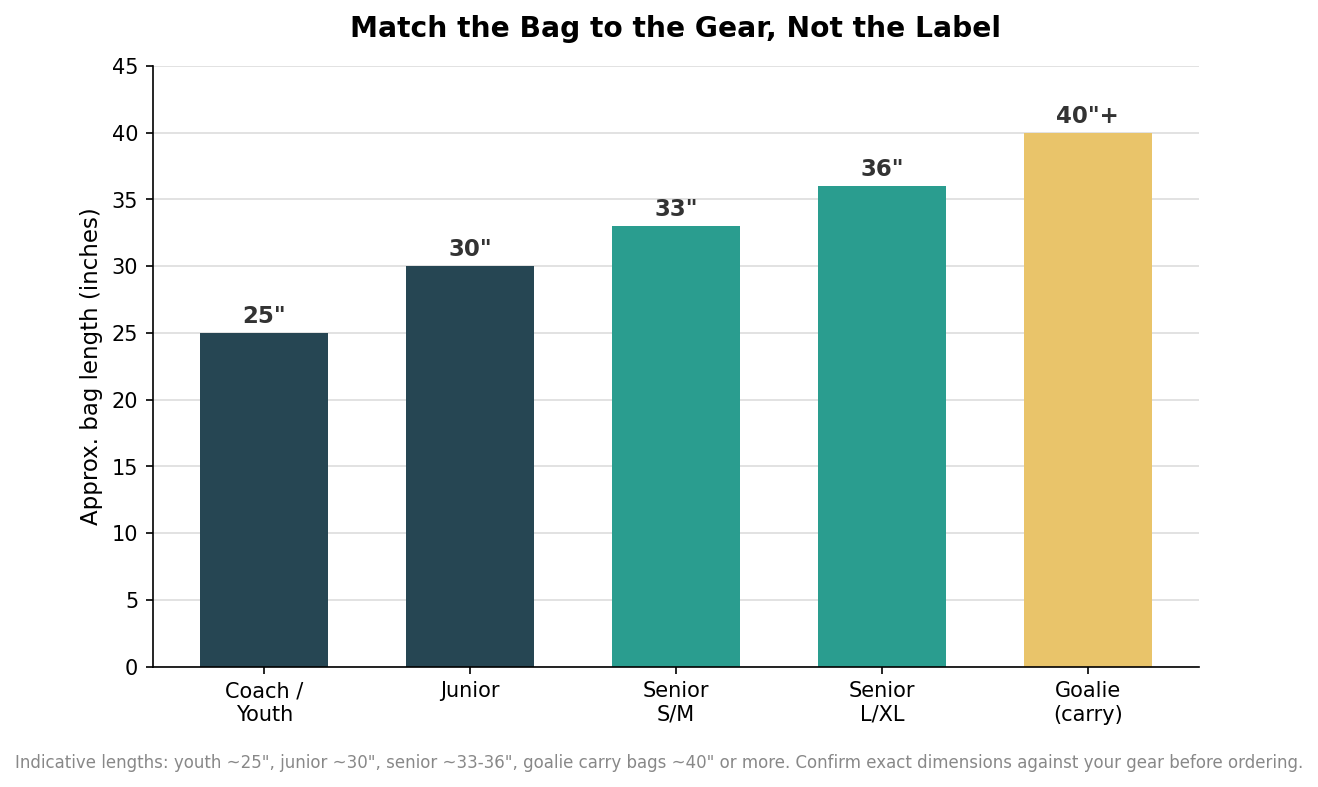
Bag sizes sound intuitive until you match them against an actual pile of pads. As a rough guide, a coach or young child’s bag runs about 25 inches, a junior bag around 30 inches, a senior small-to-medium bag about 33 inches, and a senior large or extra-large bag roughly 36 inches. Goalie gear is a different animal, and goalie carry bags commonly start around 40 inches and go up from there. Buy a size too small and the bag lives permanently overstuffed, which is the fastest way to split a seam or strip a zipper. Buy far too large for a young player and you get dead weight they cannot carry. Size to the gear that actually goes in the bag, and when you are ordering for a whole team, order across the size run rather than defaulting everyone to one dimension.
Mistake 2: Ignoring ventilation until the smell arrives
The infamous hockey smell is not inevitable; it is what happens when wet gear sits in a sealed bag. Sweat-soaked pads need airflow to dry, and a bag with no way for air to move becomes a warm, damp box that grows bacteria and, eventually, mildew. This is why integrated mesh ventilation panels matter, and they do double duty: they let the bag breathe and they add structural strength at the panels. A moisture-resistant lining and a tarpaulin base help too, keeping water from wicking up from wet locker-room floors. When you are speccing a custom run, ventilation is not a luxury feature to cut for a lower unit price; it is the difference between gear that dries overnight and a team that dreads opening the trunk.
Mistake 3: Skimping on fabric and zippers
The parts you cannot see on a product photo are the ones that fail first. Fabric durability is measured in denier, and while 600D polyester is a common baseline, higher-grade bags step up to 1000D or ballistic nylon for real abrasion and tear resistance under a heavy, sharp-edged load. The hardware matters just as much. Look for heavy-duty, oversized zippers that can take the tension of a stuffed bag without skipping teeth, and box-stitch reinforcement, a square of stitching with a cross inside, at the handles and other stress points where weight concentrates. On a bulk order the temptation is to shave cost by dropping to the thinnest fabric and lightest zipper, but those are exactly the components that determine whether the bag survives one season or five.
In practice, the fabric and the hardware need to be matched to the load. A goalie bag carrying heavy, rigid pads asks more of its seams and zippers than a skater’s bag of the same size, so it is worth stepping up the denier and the zipper gauge on the larger sizes even within a single team order. A self-repairing coil zipper, which reseats its teeth when you run the pull back over a snag, will outlast a cheap tooth zipper on a bag that gets stuffed and yanked every day. These are small line-item differences at order time and large differences by the playoffs.
Mistake 4: Defaulting to wheels without weighing the cost
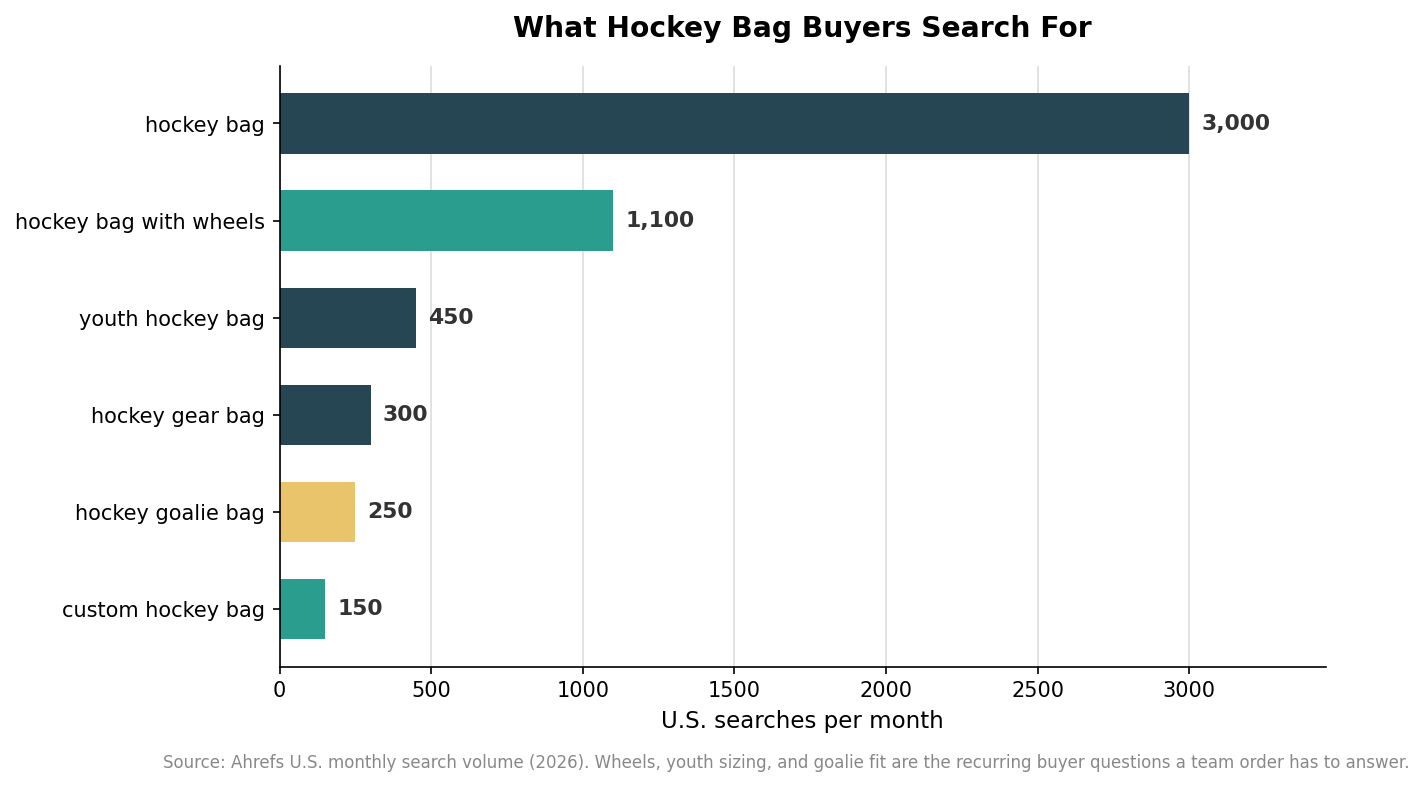
Wheels feel like an obvious upgrade, and for a player hauling gear across a long parking lot or through an airport they genuinely are. But the wheel assembly and reinforced frame add real weight to the empty bag, and wheels are awkward on the stairs almost every rink seems to have. For youth players in particular, a heavy wheeled bag can be harder to manage than a properly sized carry bag or backpack, and it encourages worse posture when they do lift it. Search interest confirms wheels are one of the biggest questions buyers have, so it is worth deciding deliberately rather than by default. Offer wheeled and carry options in the same custom program and let families choose based on how far the gear actually travels.
Mistake 5: Treating the branding as an afterthought
For a team or a shop, the decoration is the whole point of going custom, and it is the detail most often rushed. Two things separate branding that lasts from branding that peels. First, method and placement: embroidery and a well-applied logo on a durable panel hold up to the scrapes and drags a gear bag takes, whereas a cheap surface print on a high-abrasion area wears through quickly. Second, consistency across the order: the logo, colors, and any player names or numbers should be laid out the same way on every size in the run, so a squad of mixed junior and senior bags still reads as one team. Add a clear ID element, a name panel or a bag tag, because a rink full of identical team bags is a lost-gear problem waiting to happen. Decide placement and decoration method up front, approve a physical proof, and confirm every figure and dimension here against your supplier’s actual specs before you commit the full order.
Leave a Reply