The smell that lives in a hockey bag is not really about the bag. It is biology. But the bag decides whether that biology gets a fighting chance to dry out between sessions or gets sealed into a warm, damp box that makes the problem worse. Understanding what actually causes the odor makes it obvious which bag features are worth paying for and which are marketing, and it changes how you pack, dry, and clean the gear you already own.
What actually makes the smell
Sweat itself is nearly odorless. The smell comes from bacteria that feed on the sweat trapped in foam padding and fabric, and hockey gear is close to a perfect habitat for them: warm, soaked after every skate, and packed with absorbent foam that holds moisture for hours. When that gear goes straight into a closed bag, the steam coming off the pads has nowhere to go. Equipment managers describe the sealed bag as a greenhouse, and that is exactly right. The bacteria multiply in the dark, warm, humid space, and by the next skate the gear smells because it never got dry.
Two facts follow from this. First, the enemy is trapped moisture, not dirt, so anything that speeds drying helps and anything that seals wetness in hurts. Second, the bag is only one link in the chain. A well-ventilated bag still stinks if the gear is repacked wet and never aired out, and even a basic bag stays tolerable if the gear comes out to dry after every use.
Ventilation features that actually earn their place
Because trapped moisture is the problem, the features that matter are the ones that move air. The simplest is a set of grommets or vent holes that let a closed bag breathe. A step up is mesh side panels that trade some water resistance for real airflow. The most useful design many buyers overlook is a dry-out panel: a section that unfolds to reveal a mesh window, so the bag can sit fully closed on a garage floor and still let the gear inside off-gas overnight. A U-shaped main opening helps too, less for airflow than for access, because a bag that opens wide gets unpacked completely instead of half-emptied with damp gear left in the corners.
What does not fight odor is raw fabric thickness. A heavier, tougher shell resists abrasion but seals moisture in just as well as a thin one, sometimes better. When you compare bags, separate the durability question from the ventilation question and make sure the bag earns marks on both rather than assuming a premium price buys airflow.
Fabric and construction, without the marketing
Bag shells are usually polyester rated by denier, a measure of yarn thickness where a higher number means a heavier, more abrasion-resistant weave. Entry bags use lighter polyester, mid-range bags step up to tougher ripstop or honeycomb weaves that stay relatively light, and the most rugged bags use a tarpaulin base that is highly abrasion resistant and close to waterproof but noticeably heavier. The ranges below are indicative rather than exact, and the important point is what they do not tell you.
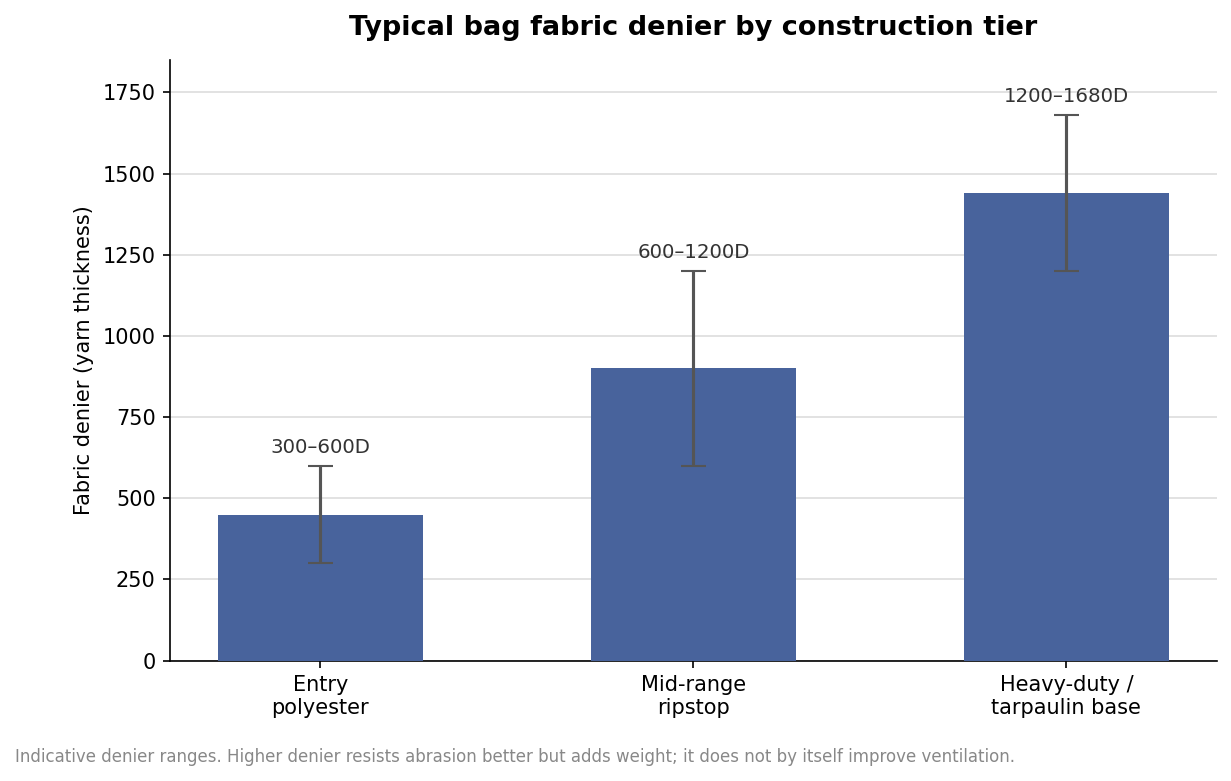
Higher denier buys life span, not freshness. A 1200-denier tarpaulin base will outlast a 300-denier shell by years and shrug off wet locker-room floors, but it will hold humidity inside just as stubbornly unless the bag also has vents or mesh. This is why the smartest construction pairs a tough, wipeable base — where the gear sits and drips — with a ventilated upper that lets the whole thing breathe. A dedicated skate pocket matters here as well: keeping wet blades and their runners away from soft pads limits both rust and the transfer of moisture into fabric that dries slowly.
The routine the bag cannot replace
No bag dries gear on its own. The single habit that does more than any feature is emptying the bag after every skate and letting the gear dry on a rack with a fan until it is genuinely dry, not just cooler. Beyond that daily airing, the different pieces of a kit need real cleaning on very different schedules, and treating them all the same is why so many bags never recover.
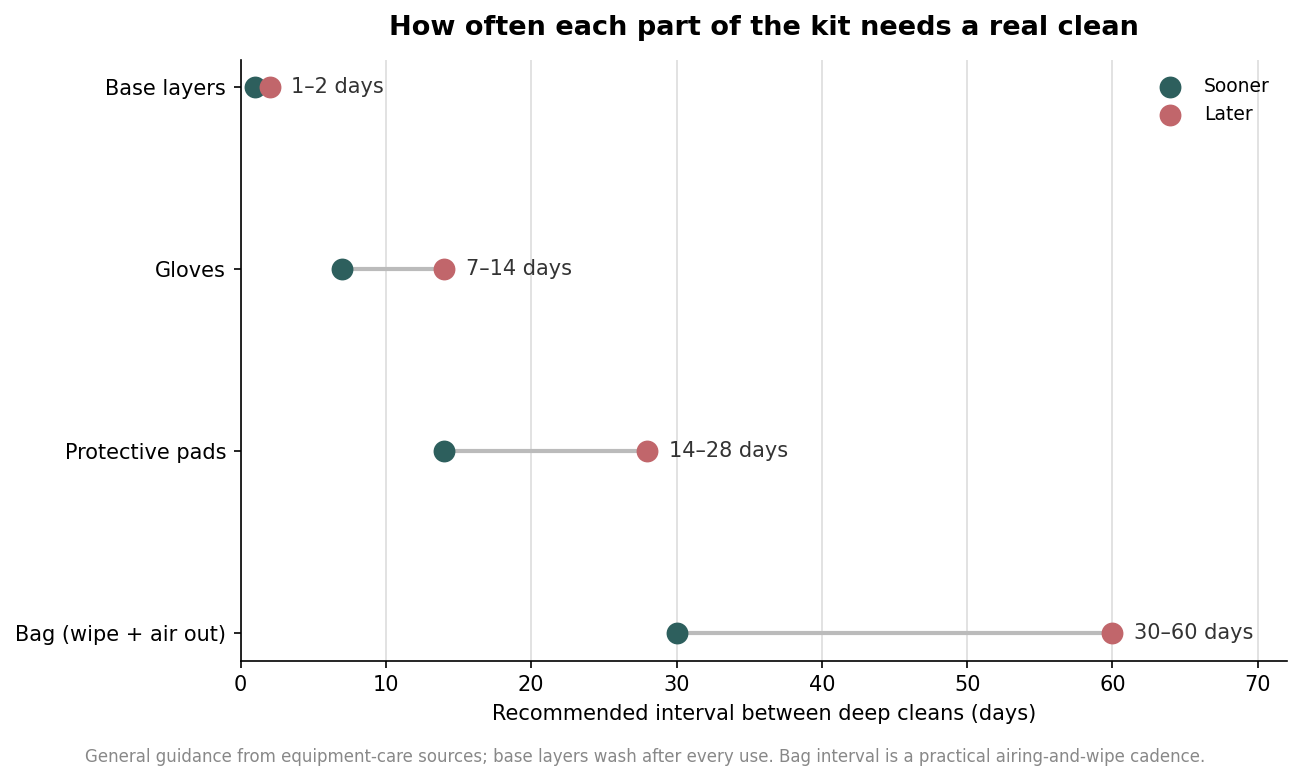
Base layers absorb the most sweat and should be washed after essentially every use. Gloves and pads can go longer, but they still need periodic cleaning, and when they do get washed the guidance is consistent: cold water, a gentle cycle, no fabric softener, no bleach, and no dryer heat, because high heat both amplifies old sweat odors and breaks down protective foam. Sunlight is a free tool here, since UV helps kill odor-producing bacteria, so airing gear outside on a dry day does double duty. The bag itself benefits from an occasional wipe-down of the interior and a full air-out, which is why it sits at the long end of the cleaning schedule rather than never appearing on it at all.
Choosing a bag with odor in mind
Put together, the buying decision is straightforward. Favor a bag with genuine ventilation — vents, mesh panels, or a dry-out window — over one that only advertises a rugged shell. Look for a wipeable, water-resistant base and a separate compartment for skates so wet metal is isolated from foam. Size the bag to the gear rather than buying the largest option, because an overpacked bag compresses the padding and blocks the very airflow you are paying for. Then treat the bag as what it is: a way to carry and breathe out moisture between skates, not a place to store wet gear. Get those two things right, the hardware and the habit, and the rink-bag smell stops being inevitable.
Leave a Reply